Two travelers sitting across a planning table in Nairobi might both ask for a Kenya safari. One wants to see as much of the country as possible. The other wants to spend a week in the Mara until they can name the lion coalitions by sight. The multi-park vs single-park safari question sits at the center of that difference, and the answer shapes everything downstream: budget, daily pace, wildlife depth, and what kind of memories come home.
This guide covers how the two approaches compare across cost, transit, wildlife access, and trip length, so you can make the call that suits your travel style.
How Multi-Park vs Single-Park Safaris Compare
| Factor | Multi-Park Circuit | Single-Park Deep-Dive |
|---|---|---|
| Parks Visited | 2 to 4 parks | 1 park or conservancy |
| Ecosystem Variety | High: multiple habitats and wildlife communities | Low: one ecosystem, understood deeply |
| Wildlife Diversity | Broad: different species at each park | Deep: complete species range of one ecosystem |
| Travel Time | Significant: flights or drives between parks | None: all time spent in one destination |
| Animal Familiarity | Limited: brief encounters at each stop | High: individual animals identified and revisited |
| Guide Relationship | New guide at each camp | One guide for the full stay |
| Cost | Higher: internal transport adds up | Lower: no inter-park transfer costs |
| Photography | Wide species variety | Sustained behavioral and action work |
| Fatigue Level | Higher: frequent moves | Lower: settled rhythm |
| Best For | First-time visitors, checklist approach | Return visitors, photographers, behavioral enthusiasts |
The Kenya Multi-Park Circuit
What It Covers
A multi-park circuit moves through Kenya’s distinct ecosystems in one trip. In 12 to 14 days, an itinerary can take in:
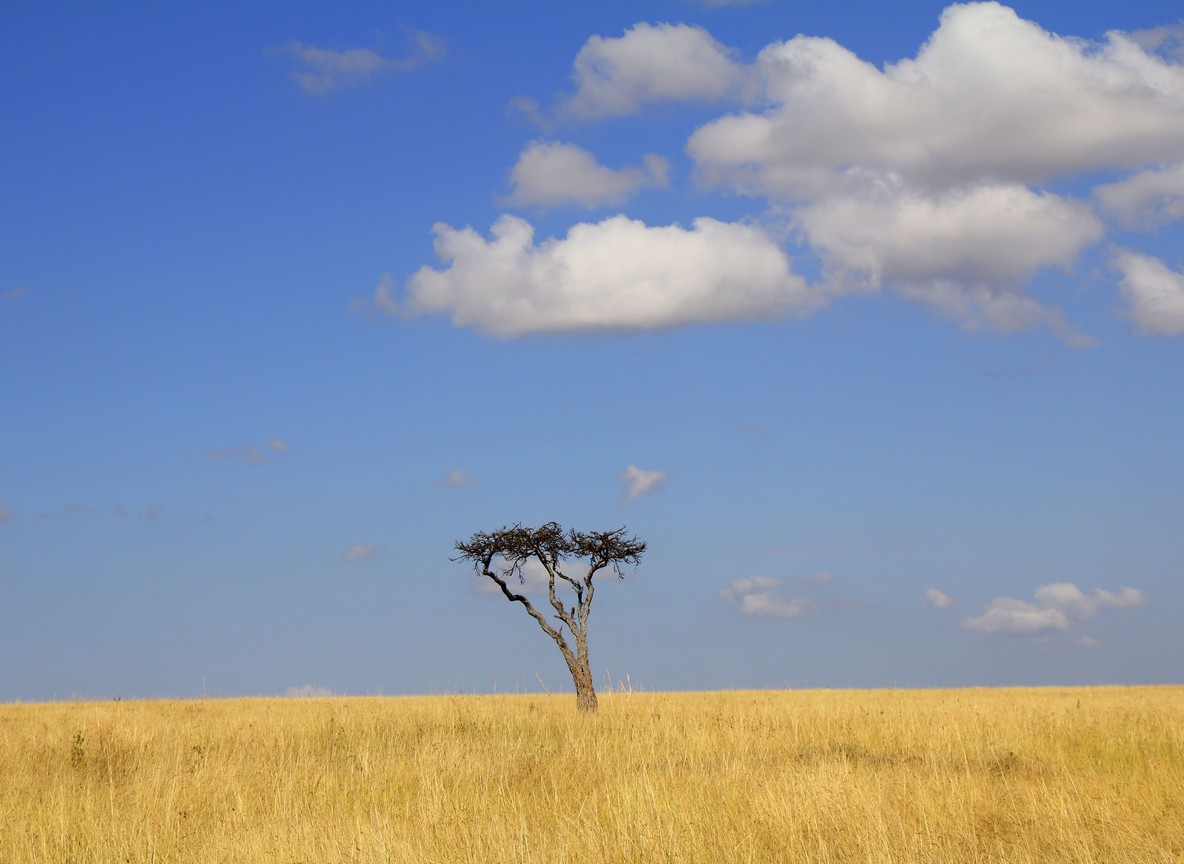
- Masai Mara: Open savannah, Big Five, Great Migration corridor, Maasai cultural context
- Amboseli: Large elephant herds against the Kilimanjaro backdrop, acacia flats, lesser flamingos
- Samburu: Semi-arid northern Kenya, home to the Samburu Special Five (Grevy’s zebra, reticulated giraffe, Somali ostrich, Beisa oryx, gerenuk)
- Tsavo East: Red elephants, Yatta Plateau, wide wilderness feel
- Lake Nakuru: Rhino sanctuary, flamingos, tree-climbing lions, concentrated waterbirds
Each park represents a genuinely distinct ecosystem. The Samburu Special Five are not found in the Mara. Amboseli’s open acacia flats look nothing like Tsavo‘s volcanic lava plains. A circuit itinerary delivers the kind of breadth that no single destination can replicate on its own.
Common Itinerary Structures
Fly-in circuit (3 parks, 12 days):
- Nairobi to Samburu: 60-minute flight, 4 nights
- Samburu to Masai Mara: 30-minute flight, 4 nights
- Masai Mara to Amboseli: 40-minute flight, 4 nights
Overland circuit (3 parks, 10 to 12 days):
- Nairobi to Amboseli: 4-hour drive
- Amboseli to Tsavo West: 3-hour drive
- Tsavo West to Tsavo East: 2-hour drive, with game viewing en route throughout
What You Give Up
Moving between parks carries a cost beyond the transport budget. A transit day through Nairobi can absorb 6 to 8 hours of what would otherwise be game drive time. Every new camp means a new guide who does not yet know your photography style, preferred sighting types, or pace. Every new ecosystem takes a day or two of orientation before its patterns become readable.
In a 3-night stop, days one and two are often spent settling in. By day three, when the guide is starting to show the more intimate sightings, it is time to pack for the next camp.
The Single-Park Deep-Dive
Depth Over Distance
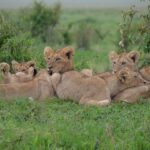
A single-park stay of 7 to 10 nights produces a fundamentally different kind of trip. By day three, many guests can identify the resident lion prides individually. By day five, they recognize a particular cheetah’s preferred morning hunting route. By day seven, a guide is revealing behavioral detail that only surfaces over repeated visits.
The Masai Mara rewards this depth more than most African parks. With more than 95 species of large mammals and over 500 bird species in a comparatively compact area, the ecosystem has enough complexity to sustain 10 full game drives without repetition. The Oloololo lion coalition, known cheetah mothers with cubs, named leopard territories near specific luggas: these become recurring characters in a story rather than species on a checklist.
Behavioral Access and Photography
For wildlife photographers, the single-park approach is strongly preferable. Returning to the same sighting in different light, morning and evening across multiple days, builds a body of behavioral observation that produces considered images rather than snapshot variety.
A photographer spending 7 nights at Olare Motorogi Conservancy in the Mara ecosystem, working with the same guide each day, will typically produce stronger work than the same photographer moving through four parks in 12 days, even with dramatically more species on offer in the circuit format.
The Familiarity Effect
There is a specific quality to recognizing an individual animal tracked across several days. On day one, a cheetah with two cubs is thrilling. On day five, returning to the same acacia to find her again, having watched her protect the cubs, begin hunting lessons, and attempt a kill, the encounter carries emotional weight that no first-sighting can match.
This familiarity effect is only possible within the single-park format.
Matching Trip Length to Your Approach
| Trip Duration | Recommended Approach |
|---|---|
| 5 to 7 days | Single park: maximize one destination |
| 8 to 10 days | Single park anchor with brief second park (2 to 3 nights secondary, 5 to 6 nights main) |
| 12 to 14 days | Multi-park circuit: 3 parks, 4 nights each |
| 14 to 18 days | Full multi-park circuit with coast or lake extension |
Which Approach Fits You
Choose a multi-park circuit if you:
- Are visiting Kenya for the first time and want the full breadth of the country’s wildlife diversity
- Have 12 to 14 days and want both savannah and semi-arid northern Kenya in one trip
- Want species only available in specific parks (Grevy’s zebra in Samburu, rhino at Nakuru, red elephants in Tsavo)
- Are energized by new landscapes, variety, and a wide-ranging itinerary
- Are comfortable with the transit time a circuit requires
Choose a single-park deep-dive if you:
- Have 5 to 10 days and want maximum immersive depth in one place
- Are a wildlife photographer building toward behavioral and action images
- Are returning to Kenya and want to go deeper into a park already seen at surface level
- Value consistency: one guide, one camp, a shared story built across multiple drives
- Prefer intimacy and familiarity over breadth and variety
Both approaches produce rewarding safaris. The decision comes down to time, budget, and what kind of experience you want to come home with.
Explorer Notes
Transit fatigue is real. Even fly-in circuits involve airport transfers, transit camps, and adjustment days. Build at least one full rest evening into a multi-park itinerary, particularly at the midpoint of the trip.
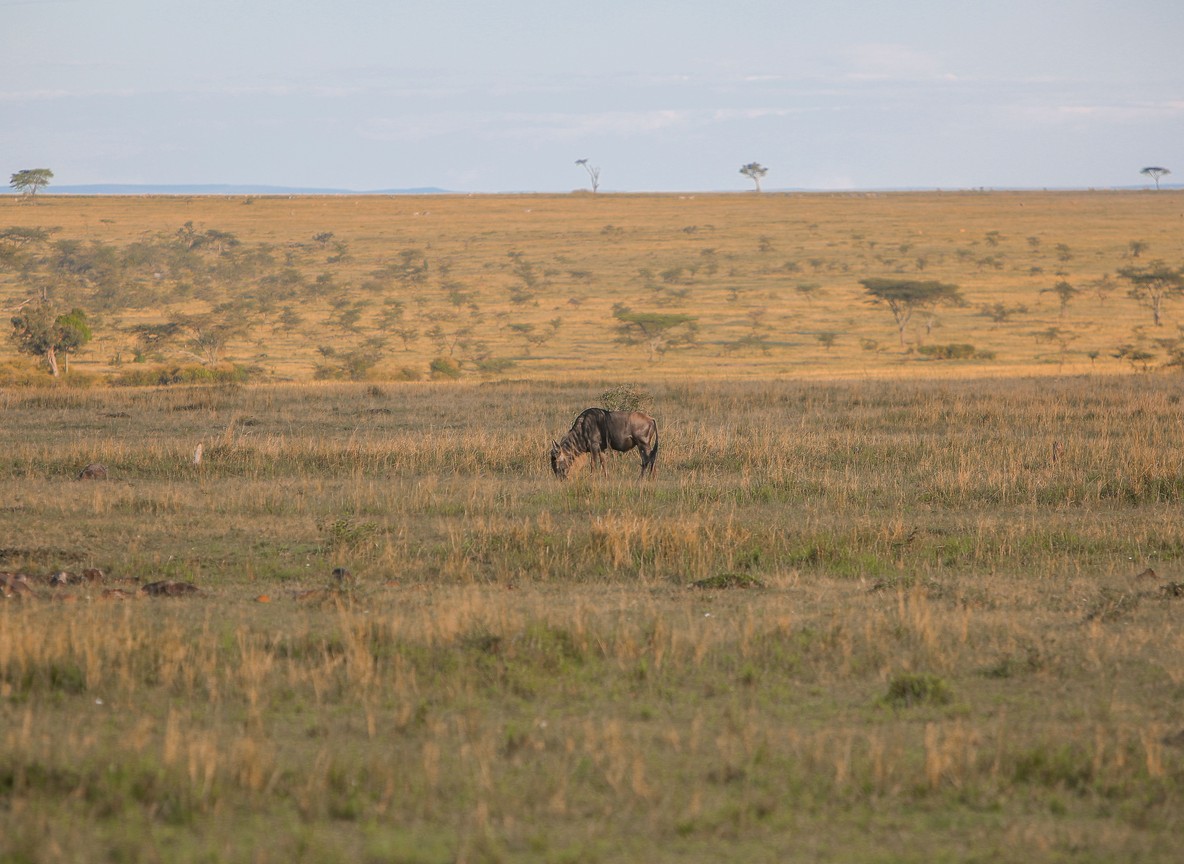
Migration timing changes the calculus. If the Great Wildebeest Migration is a priority and the timing aligns with a Mara river crossing, a single-park stay in the Mara often delivers more than a circuit that catches the Mara briefly on day 3 of 4.
Conservancy stays extend the deep-dive. Private conservancies adjacent to Masai Mara (Olare Motorogi, Naboisho, Ol Kinyei) permit off-road driving and night game drives that the national park does not allow. Group sizes are smaller. For single-park travelers, these are worth prioritizing over standard park camps.
First-time visitors frequently underestimate drive times. Kenya’s distances look manageable on a map. The roads often tell a different story. Confirm overland drive times with a ground operator before building an itinerary that depends on arriving in good time for an afternoon drive.
Conclusion
The multi-park vs single-park safari choice is not about one approach being better than the other. It is about which one matches the trip you actually want. Short stays favor depth. Longer trips can absorb the transit costs of a circuit and still arrive somewhere meaningful at each stop. For first-time visitors with two weeks, a circuit is hard to argue against. For photographers, return visitors, and anyone who wants to know a place rather than simply see it, the single-park deep-dive consistently delivers more.
Have questions about this itinerary or destination? Get answers from a safari specialist before you commit.
Inquire MoreFurther reading
More safari planning resources
- Nairobi to Maasai Mara route guide from Valley Safaris
- Compare Kenya safari packages on FindMySafari
- Big Five safari collection on FindMySafari
- Map of Tsavo from Valley Safaris
Related guides: Air Safari vs Road Safari in Kenya: Which Fits Your Trip Better.